Standing Seam Metal Roof Coating Done Right in Beulah ND
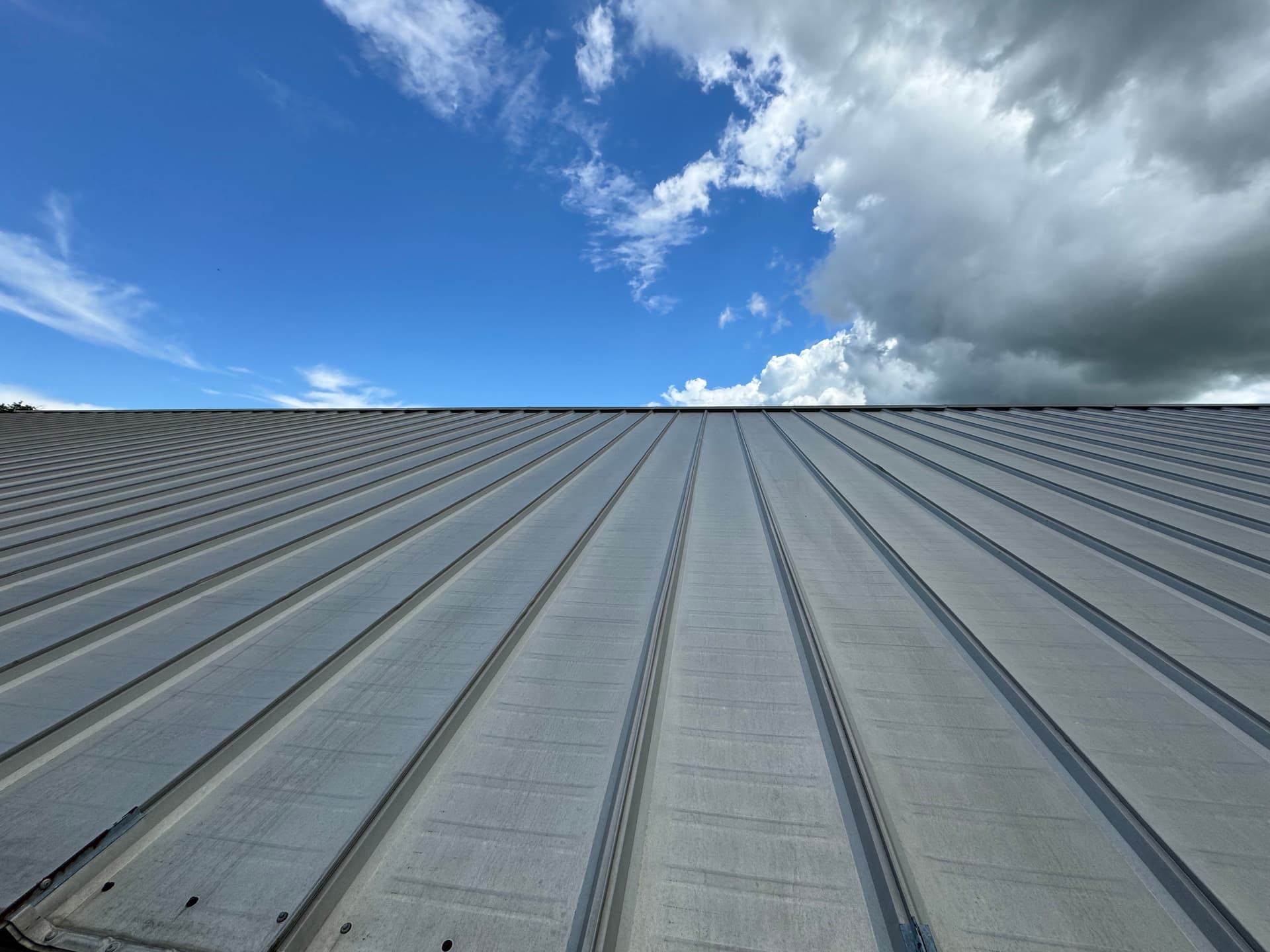
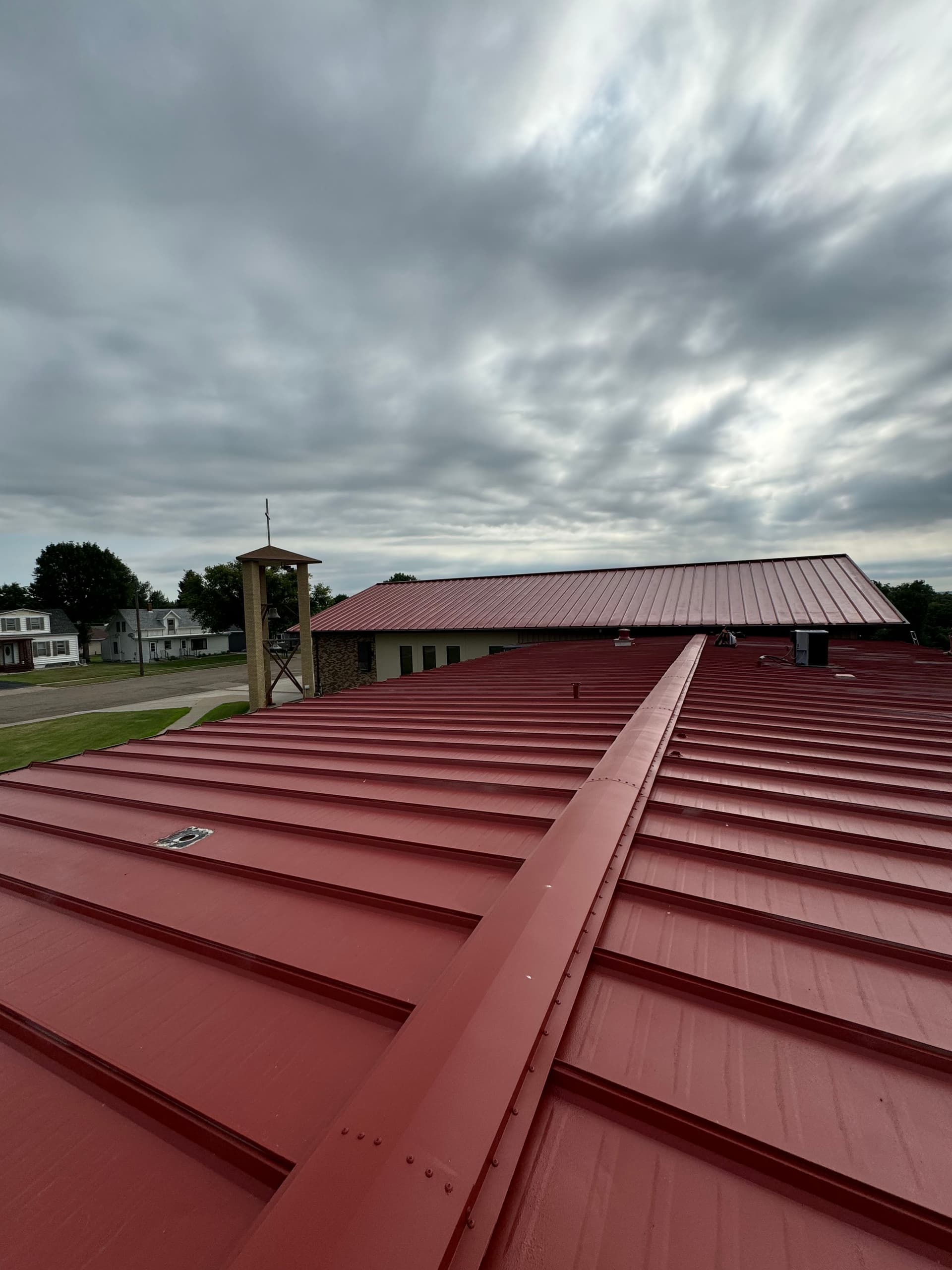
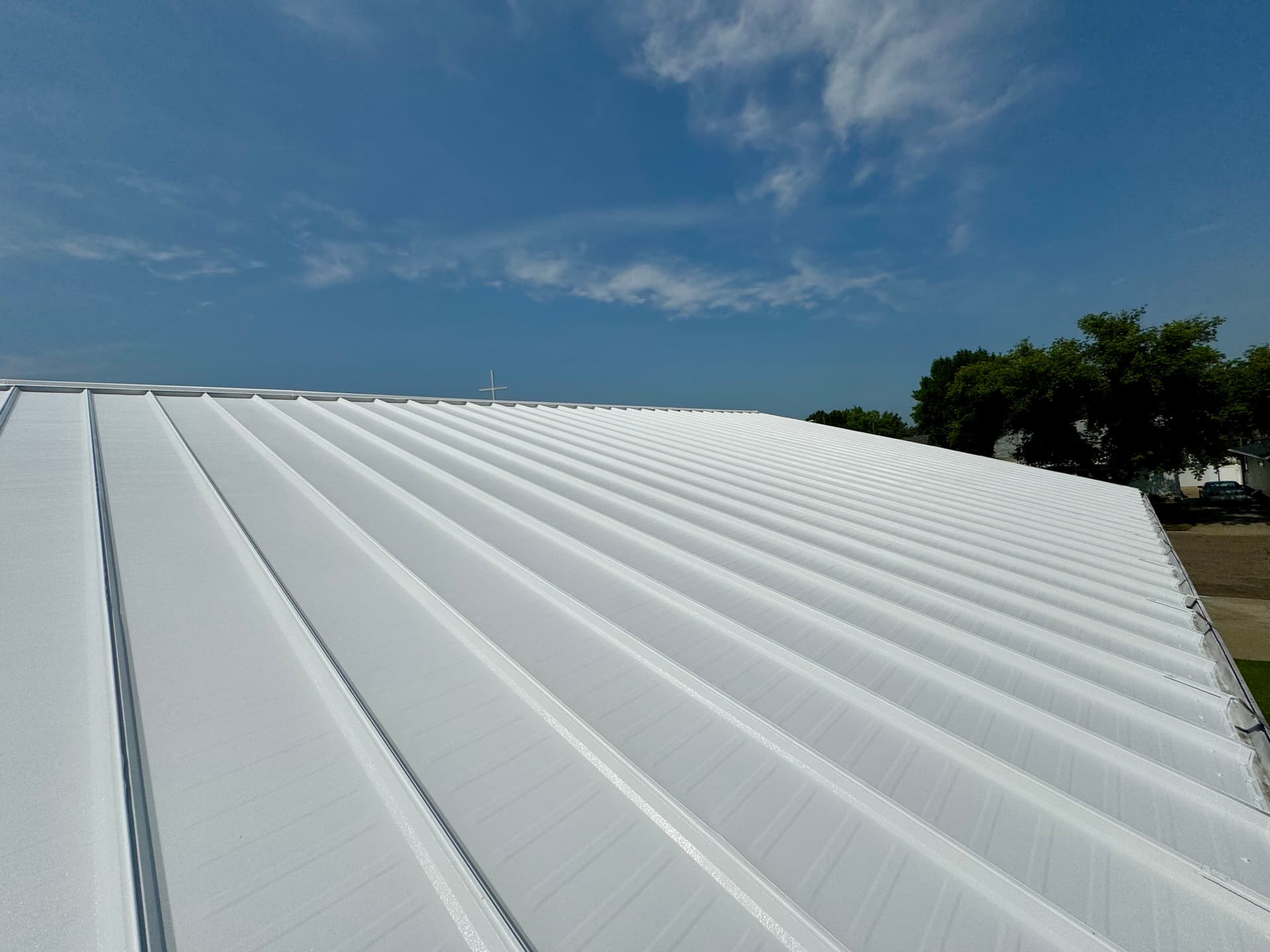
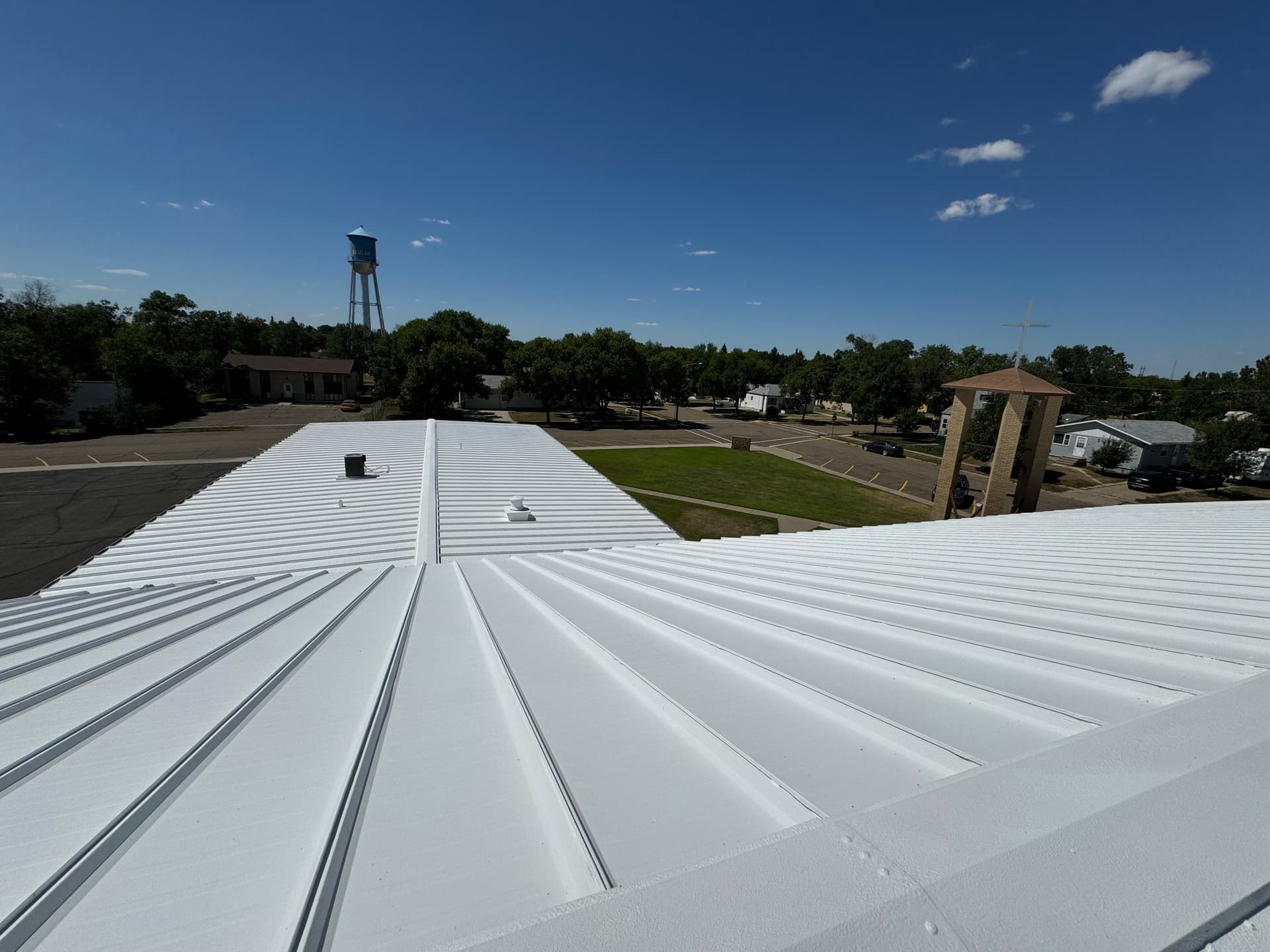
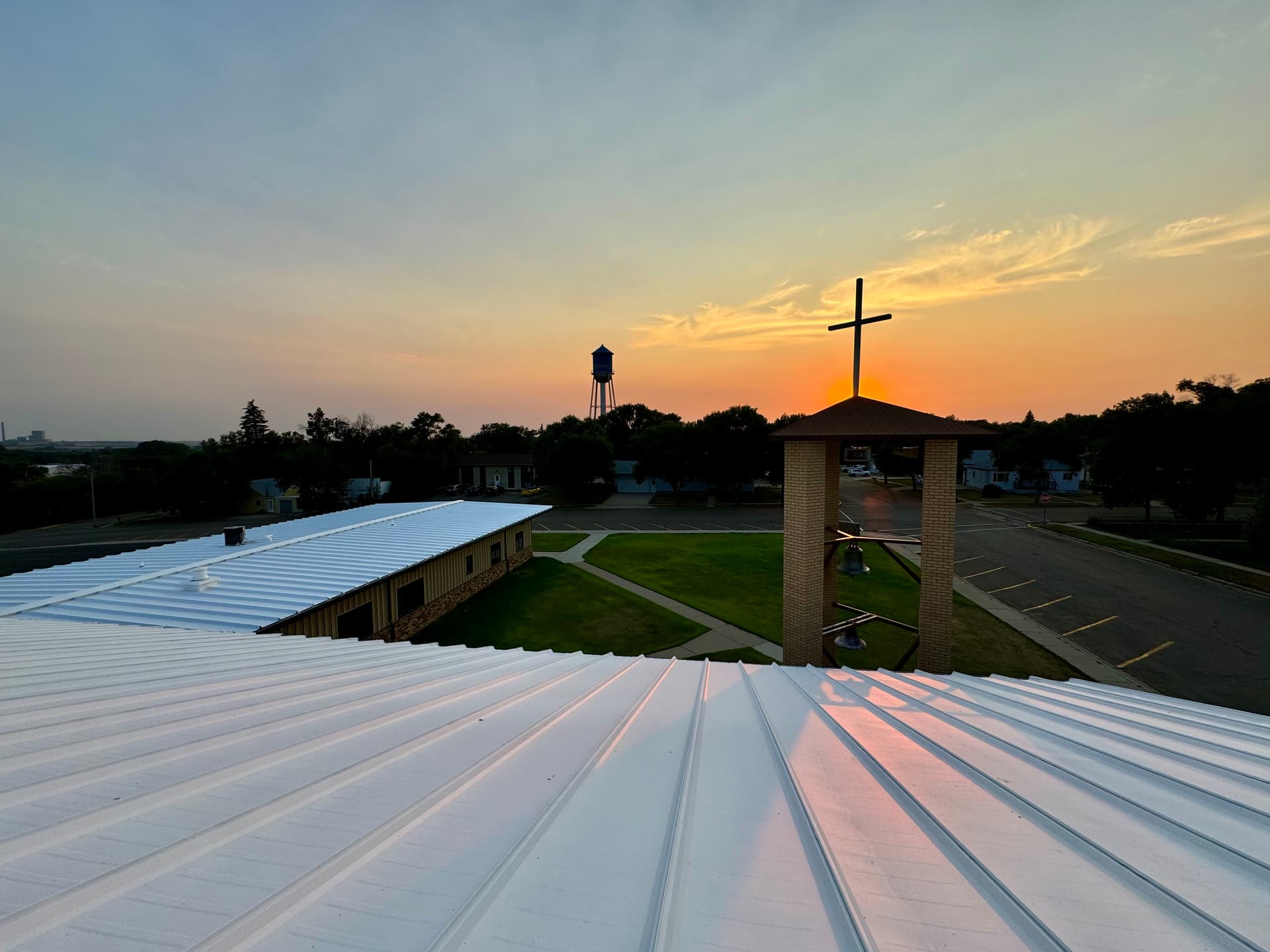
This standing seam metal roof had seen better days. The red finish was faded and worn, and the seams were at that stage where water infiltration becomes a real concern - especially heading into another North Dakota winter with its freeze-thaw cycles, heavy snow loads, and punishing wind. Full replacement is one option, but it's not always the right one. Here, a fluid-applied roof coating was the smarter call.
What we applied is a coating system built specifically for metal roofs. It bonds directly to the metal panels and seams, creating a seamless, flexible membrane that moves with the roof instead of cracking under temperature swings. That flexibility matters a lot in ND. When temps drop hard in January and the metal contracts, a rigid coating fails. This one doesn't.
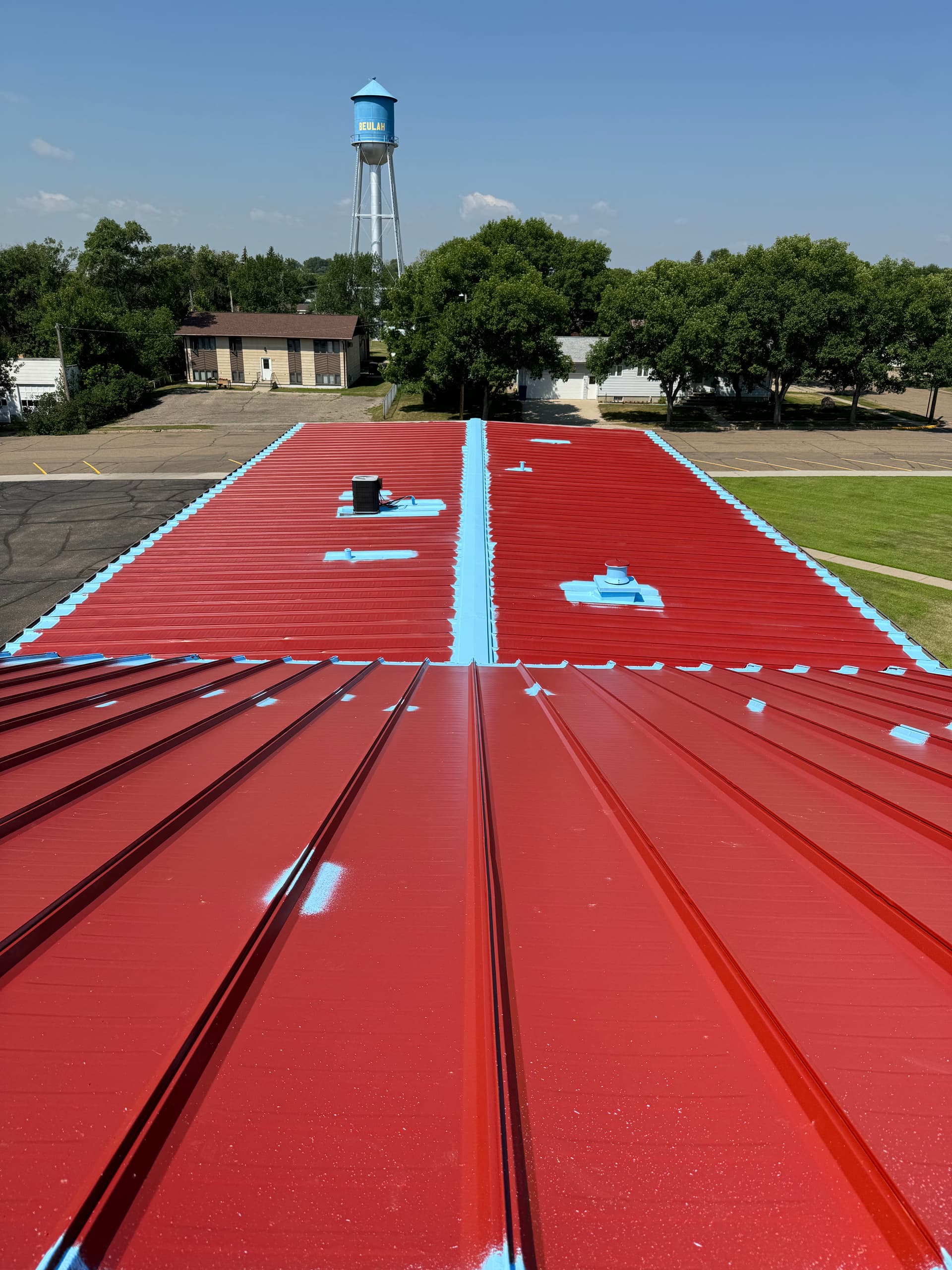
The seams and all penetrations got special attention first - sealed tight before the topcoat went on. That's where most metal roofs leak, right at the seams and around vents or curbs. Getting that right is the difference between a coating job that lasts and one that lets you down in year two. We don't skip that step.
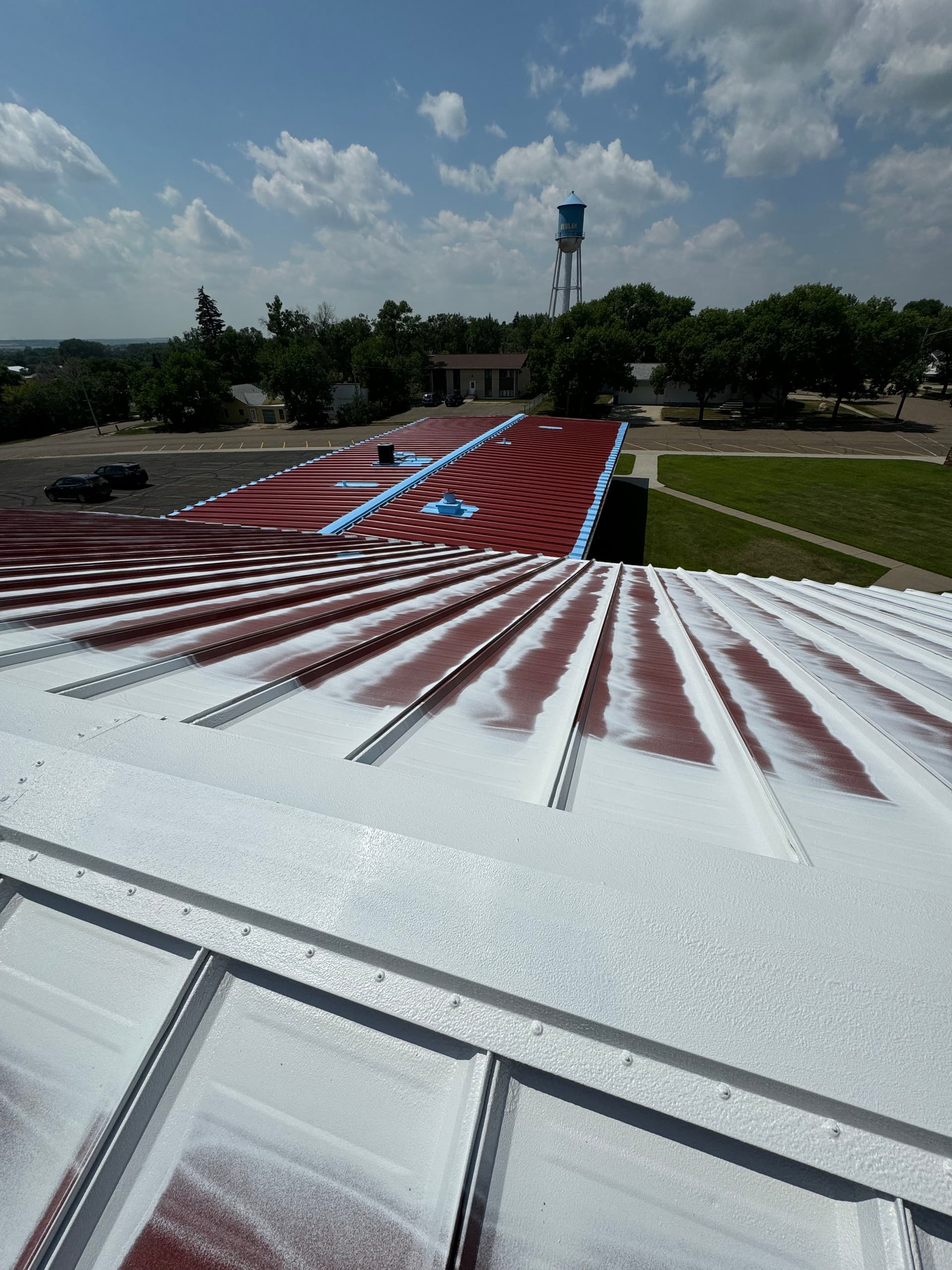
The finished white coating does more than just protect. White reflects solar heat, which reduces the cooling load on the building during summer. That's a real benefit for a structure this size. And the look - going from a dull, oxidized red to a clean, bright white - is a dramatic difference you don't have to squint to notice.
Roof replacement is expensive and disruptive. When the structure underneath is solid and the metal itself is still in good shape, a quality fluid-applied coating gives you a legitimate path to extended roof life without the cost or hassle of a full tear-off. This is what that looks like done well.