Storm Damage Leaking Weeks Later? Here's What's Happening
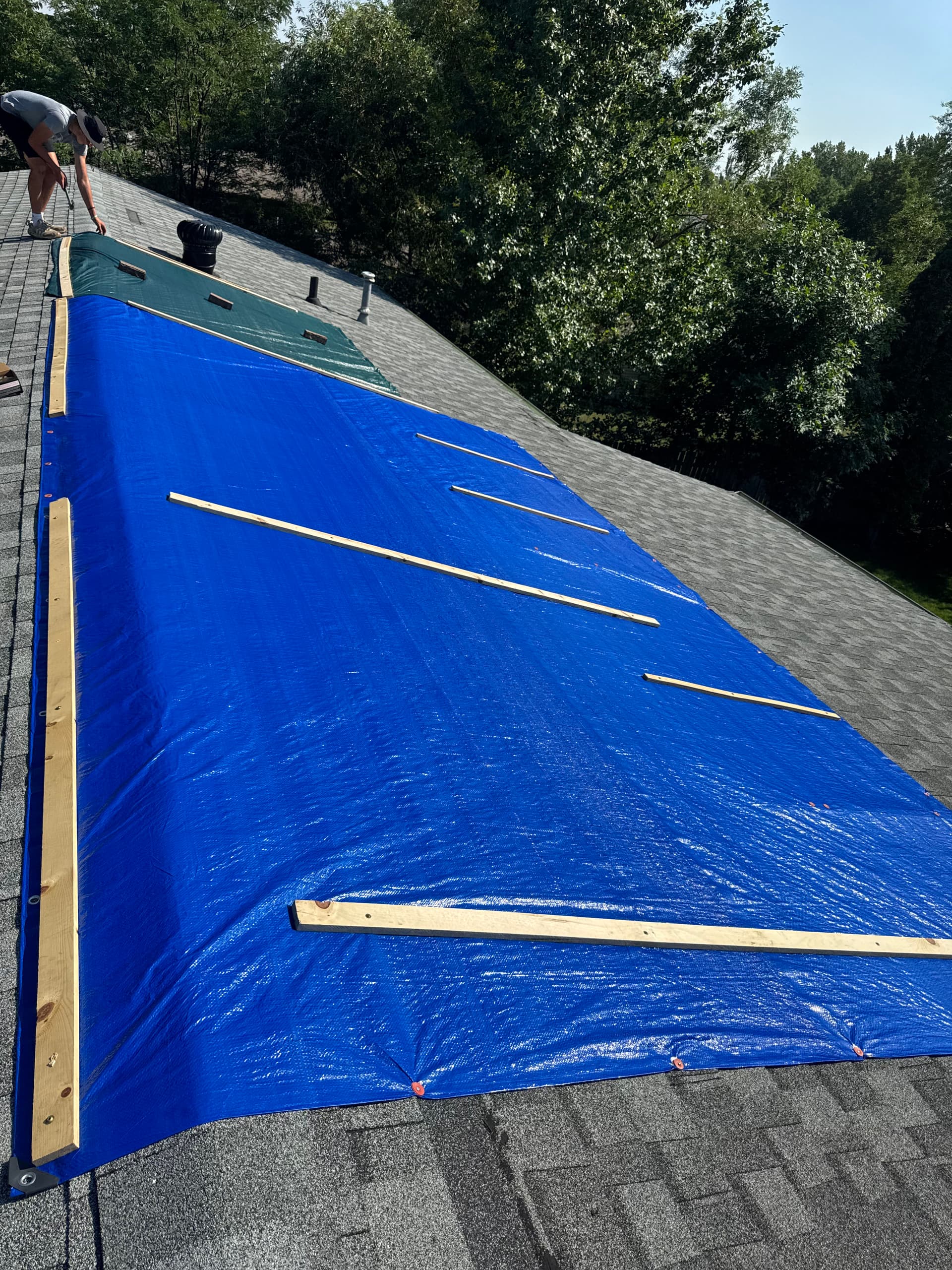
A lot of homeowners assume that if their roof survived a storm without an obvious collapse or missing shingles, they're in the clear. That's not usually how it works. Storm damage is sneaky - it hides under lifted shingles, around flashing, and in spots that water finds long before you do.
What tends to happen is this: the storm passes, everything looks fine from the ground, and then a few weeks later you've got a water stain on the ceiling or a drip you can't explain. By that point, water has already been sitting somewhere it shouldn't be. The damage is already spreading.
That's exactly why emergency tarping matters so much. When a section of roofing gets compromised - whether from wind, impact, or failing shingles - getting a proper tarp in place stops the bleeding. We use wood battens to hold the tarp down tight so it doesn't shift or let water sneak underneath. It's not a permanent fix, but it's what keeps a manageable repair from turning into a full replacement.
An inspection is really the starting point for all of this. We can get eyes on areas of your roof that you'd never see from the ground - and that's where most of the hidden damage lives. Catching it early is almost always the cheaper option. A free inspection is a low-stakes way to know exactly what you're dealing with before it gets worse.